Fence installation in a sloped or uneven yard requires more planning than on flat ground. Changes in height can leave wide gaps, crooked panels, weak posts, or places where water collects. The right layout and fence style can create a secure, clean-looking boundary that follows the contours of the land.
Start by measuring how much the ground rises or falls. A slight slope may need small adjustments, while a steep hill may require stepped panels or custom sections.
Use stakes and a string line to mark the route. Keep the string level so you can see where the ground changes below it. Measure the space between the string and the soil at several points. These measurements show where the fence may need shorter panels, deeper posts, or a changed layout.
Two common methods for installing on slopes are stepped and racked installation. The best choice depends on the fence material, panel design, and amount of slope. A stepped fence uses level panels set at different heights. Each section sits lower or higher than the next, creating a stair-step look. This method works with many wood, vinyl, and metal panels. It may leave triangle-shaped gaps under the downhill side.
A racked fence follows the angle of the ground. The rails and pickets move with the slope, so the bottom edge stays closer to the soil. This can reduce gaps and create a smoother line. Rackable aluminum, chain-link, and some vinyl systems often use this method.
Consider these options:
A professional fence installation service can help match the method to the site and material.
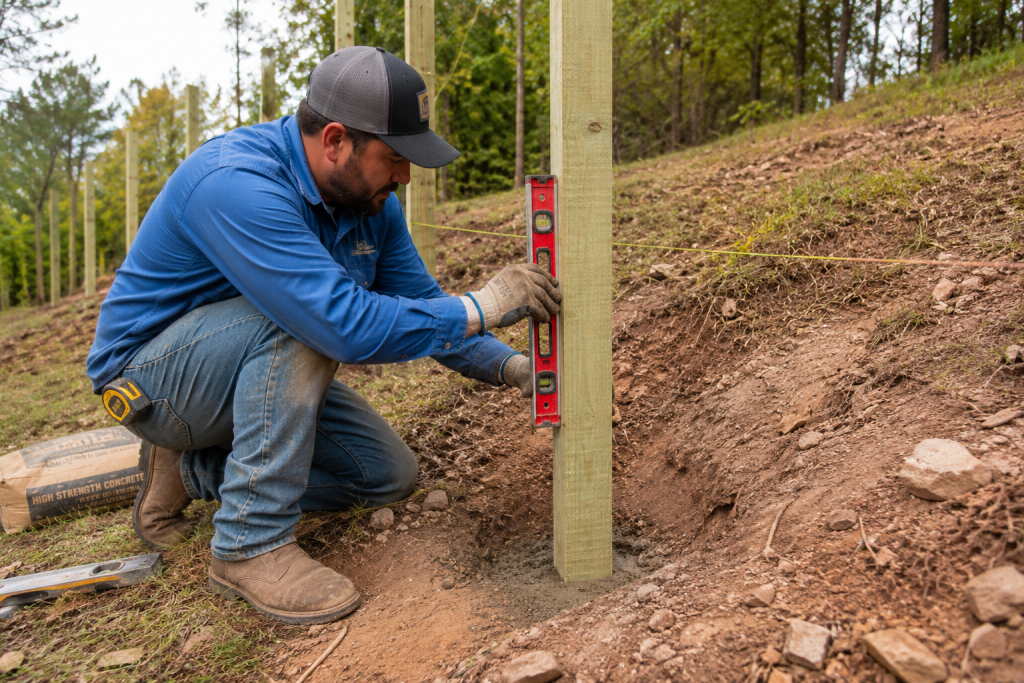
Fence posts must remain straight even when the ground is not level. Each hole should follow the planned panel width, not just the land’s shape. Poor spacing can make panels hard to fit and weaken the fence. Post depth may need to be changed in soft soil, wet areas, or places with erosion. Gravel may improve drainage, while concrete can help hold posts in place.
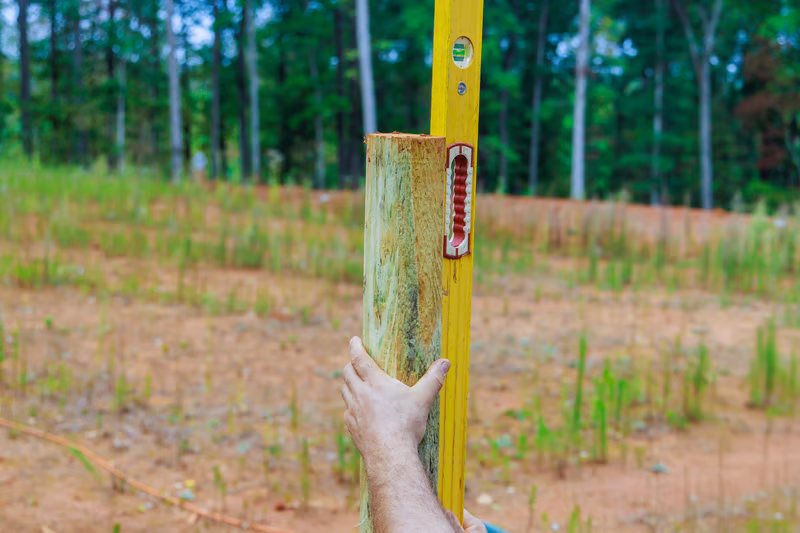
Check every post from two directions. Do not use the slope as a guide. Posts should stand upright while the rails or panels follow the selected design.
Large gaps can allow pets to escape, animals to enter, or soil to wash away. However, placing wood directly on the soil may trap water and accelerate rot. A small, even clearance is often better than forcing the fence against every bump. In low areas, installers may use longer pickets, a rot board, wire mesh, or added soil. Any fill should be packed well and should not block water flow.
Avoid loose blocks or scrap lumber that may move after heavy rain.
Water needs a clear path through the yard. A fence should not form a dam across a swale, ditch, or runoff area. Blocked drainage may cause standing water, soil loss, leaning posts, or water movement toward the home. After rain, note where water enters, collects, and leaves. Raised rails, drainage openings, or small culverts may be needed.
Existing drainage damage should be fixed before the fence is completed. A fence repair service may also be needed when older posts or panels have shifted because of erosion.
Gates work best on fairly level ground. A gate placed across a steep slope may drag, swing open, or leave a large gap underneath. It may also place extra force on the hinge post.
Choose a flatter spot when possible. For mild slopes, the bottom of the gate can be angled or raised enough to clear the high side. Wider gates need stronger posts. Check the full swing path before setting the posts.
Yes. Stepped panels, racked panels, or custom sections can be used to follow steep land. The right method depends on the fence type and grade change.
Installers may rack panels, use longer pickets, add a rot board, attach mesh, or adjust the soil. Drainage must remain open.
No. Posts should normally stand straight. The panels or rails are adjusted to match the slope.
Yes, but a level area is better. The gate may need extra clearance, an angled bottom, or stronger posts.
A sloped yard does not have to lead to crooked panels or large gaps. Accurate measurements, the right panel method, stable posts, and clear drainage can create a fence that looks balanced and performs well.
Ready to plan your project? Contact us to discuss your yard and request a fence installation estimate. Visit the Cole Deck and Fence blog for more fence planning, care, and repair tips.