Fence repair can help stop small problems from turning into bigger issues that affect the safety, strength, and appearance of your property. A fence may look fine from a distance, but loose posts, broken boards, rot, storm damage, or a gate that no longer closes can all point to trouble. Knowing the warning signs can help you act before the damage spreads.
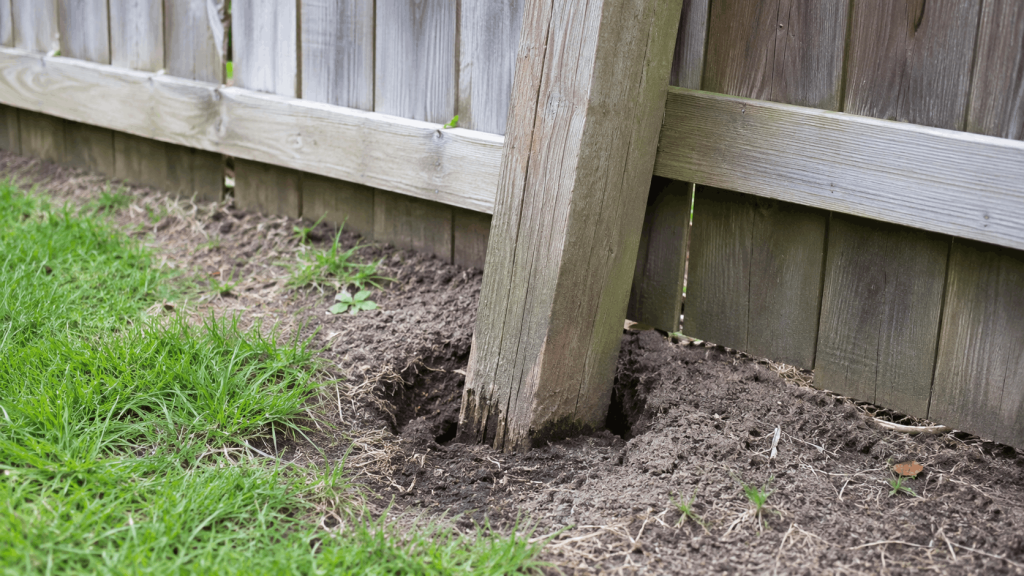
Fence posts support the rest of the structure. When a post becomes loose, the fence may lean, shake, or move when pushed. This can happen when soil shifts, water collects near the base, or the post weakens below ground.
Check for movement, cracks, soft wood, or gaps around the base.
Wood fences can develop rot when they stay damp for long periods. Rot often appears near the bottom of boards, rails, or posts. The wood may look darker, feel soft, crack easily, or begin to crumble.
Check areas near sprinklers, plants, shaded spots, and soil contact. Small areas may be repairable, but widespread decay can weaken a full section.
Cracked, split, missing, or loose boards should be handled before they cause more trouble. A broken board can affect privacy and security, while loose boards may move in strong wind and strain nearby parts.
Watch for panels that bow, sag, or pull away from posts. These signs may point to loose fasteners, damaged rails, or other hidden problems.
For more information about fence styles and options, visit the fence installation page.
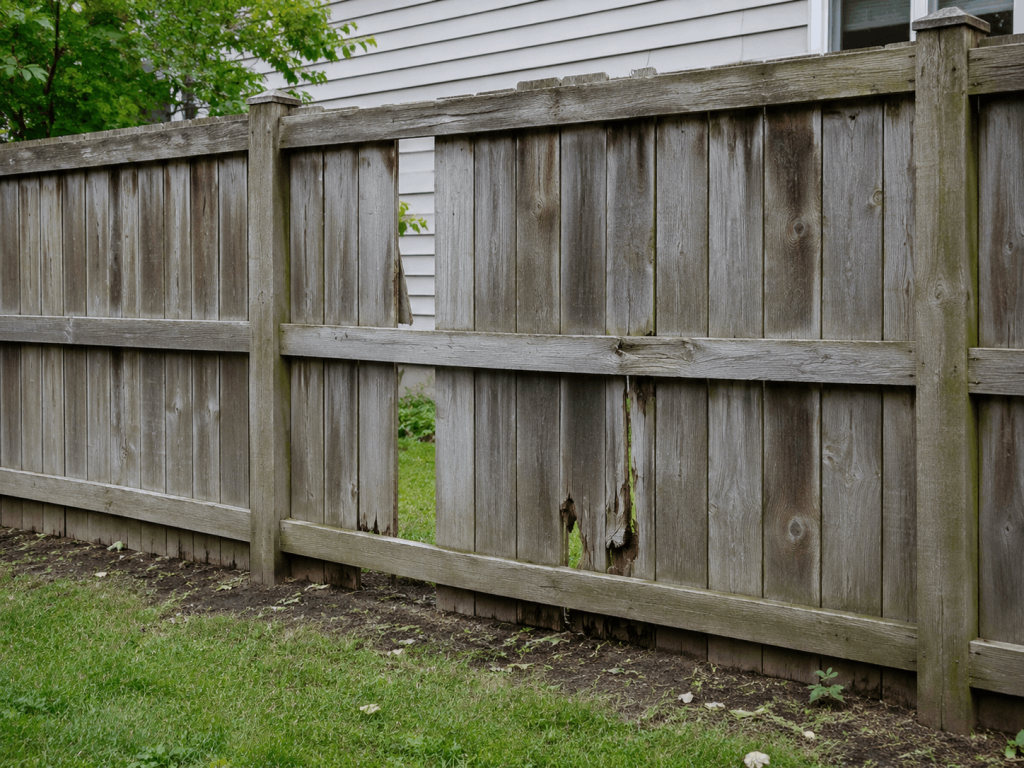
Strong wind, rain, and falling branches can quickly damage a fence. Wind may loosen posts or push panels out of place. Limbs can break boards or rails, while heavy rain can soften the soil around posts.
After severe weather, walk along both sides of the fence when it is safe. Look for leaning sections, exposed nails or screws, broken materials, and gates that no longer line up. If a section looks ready to fall, avoid leaning on it or forcing it back into place.
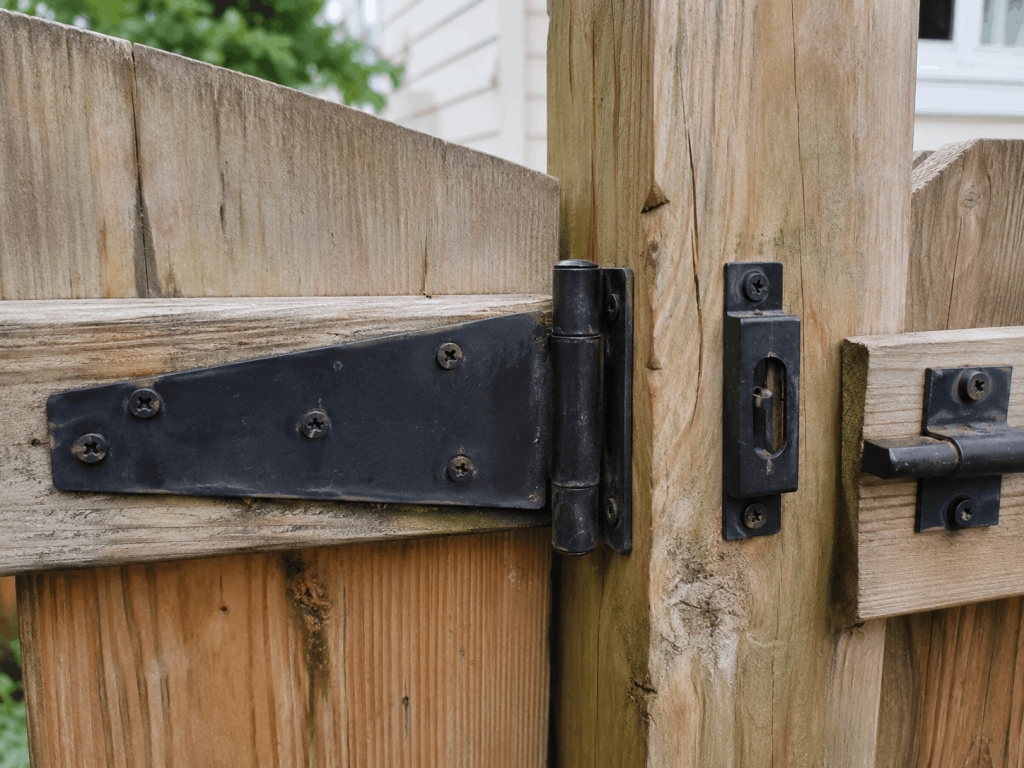
A gate that becomes hard to open may be more than a small annoyance. Sagging can point to loose hinges, a shifting post, worn hardware, or a frame that is no longer square.
Watch for these common gate problems:
Metal fences and fence hardware can develop rust over time. Small surface spots may be minor, but deep rust can weaken hinges, screws, brackets, and other parts. Check for fasteners that are backing out and hardware that no longer holds sections firmly together.
Vinyl and other materials can also crack, separate, or become loose. No matter the material, changes in the way a fence looks or moves are worth checking.
Repair often makes sense when damage is limited to a few posts, boards, panels, or hardware parts. However, a fence with widespread rot, repeated leaning, or damage across many sections may need more extensive work.
The best choice depends on the fence material, age, condition, and amount of damage. A professional inspection can help you decide whether targeted repairs or larger replacement work makes more sense.
Push the post gently from the side. If it moves at the base, leans, or has a visible gap around it, it may need repair.
Yes. A single damaged board can often be replaced if the nearby rails and posts are still in good condition.
Yes. Look for leaning posts, broken boards, loose panels, gate problems, and fallen branches. Early checks may prevent added damage.
It can be. Worn hinges, a loose post, or movement in the nearby fence can cause a gate to sag or stop closing correctly.
Fence damage rarely gets better on its own. Loose posts, rot, broken boards, weak panels, and gate problems can become more serious when ignored. Regular checks can help you catch changes early and keep your fence working as it should.
If your fence shows signs of damage, Cole Deck and Fence can help you decide what comes next. Contact us about your project, or visit our blog for more outdoor property tips.