A smart deck installation can turn a small backyard into a useful place to relax, eat, and spend time outside. When space is limited, every part of the deck matters. The right layout can help you create room for seating, stairs, plants, and other features without making the yard feel crowded.
A good plan also helps you avoid using more materials than the space needs. That can keep the design simple, useful, and easier to maintain over time.
Before choosing railings, furniture, or finishes, think about how you want to use the deck. A small backyard often works best with a simple shape that follows the home, rather than extending too far into the yard. A narrow deck along the back of the house can provide enough room for a small table, grill, or bench while leaving open lawn space.
Keep walking paths open. People should be able to move from the house to the yard without stepping around furniture. A clear layout makes a small deck feel larger and easier to use.
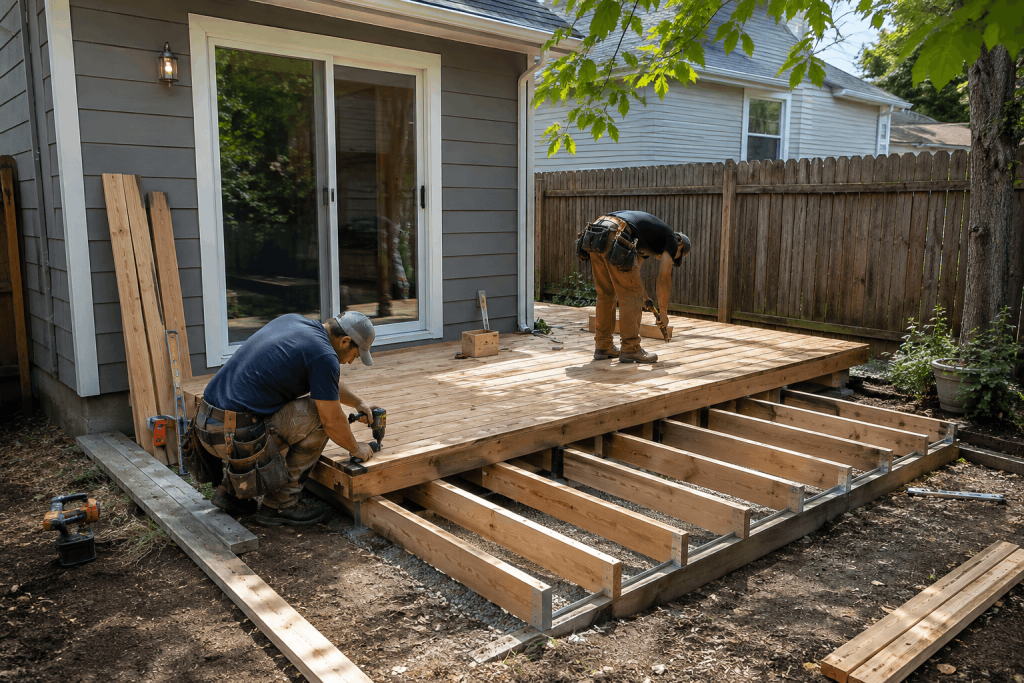
Large outdoor chairs can take up more room than expected. Built-in benches give you seating without filling the deck with extra furniture. They can be placed along one side, in a corner, or against part of the railing.
Built-in seating also helps keep the main floor area open. This can make it easier to move around the deck and gives you more room for a table, grill, or plants.
Stairs are needed on many raised decks, but they can also take up valuable yard space. Their placement should be part of the plan from the start.
Straight stairs often use less space than wide stairs that extend across the full deck. Placing stairs near one side can keep the center open for furniture and movement.
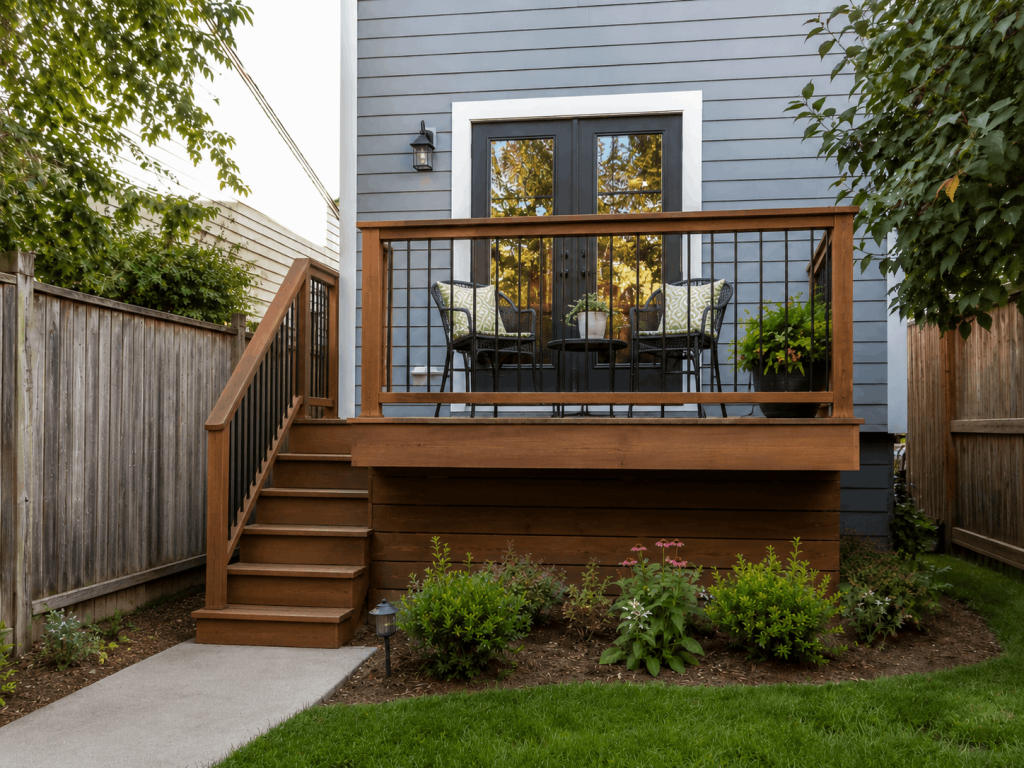
Furniture should match the deck size. Measure the area before buying a table, chairs, or outdoor sofa.
Good choices for smaller decks include:
Leave enough open floor space around each piece. A little extra room can make the deck easier to move through and more comfortable to use.
A small change in height can help separate one outdoor use from another. A slightly raised area near the house could hold a dining set, while a lower section could connect to the yard.
Keep the design simple. Too many levels, railings, or steps can make a small space feel broken up. One clear height change is often enough.
When floor space is limited, look upward. Vertical features can add privacy, shade, and style without taking up much room on the deck.
A slim privacy screen can block a nearby view. A pergola can help define the deck and provide light shade. Wall-mounted planters can add greenery without using walking space.
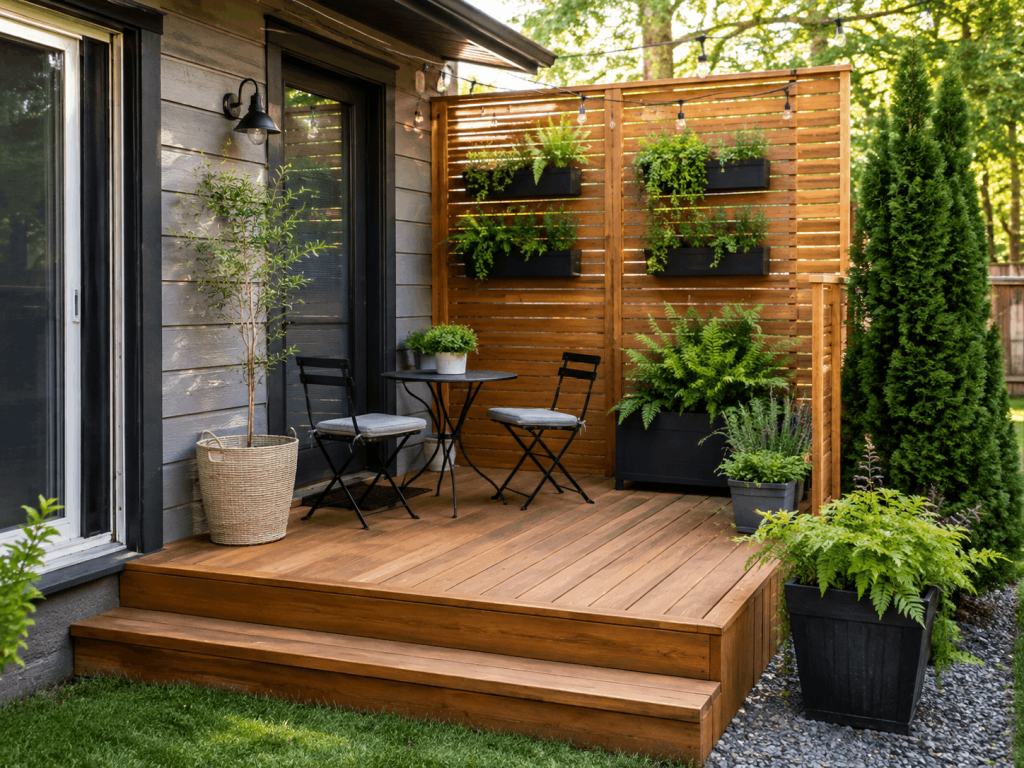
A deck should not block the rest of the backyard. Use it as one part of the outdoor space instead of treating it as the whole yard. Connect the deck to a lawn, garden bed, gravel path, or patio. Similar materials and simple planting can help the areas feel connected.
If you are planning a new deck, explore our deck installation services for help with layout, materials, and construction. If you already have a deck that no longer works well for your space, deck remodeling services may help improve the layout, stairs, seating, or overall look.
The deck should fit your main needs while leaving enough open yard space. Measure furniture and walking areas before choosing the final size.
Yes. Built-in benches save floor space and reduce the need for several chairs. Some designs can also include hidden storage.
Simple square, rectangular, and corner layouts often work well. They are easier to furnish and make good use of limited space.
Yes. New stairs, built-in seating, updated railings, or a better layout may make an older deck easier to use.
A small backyard can still support a comfortable and useful deck. The key is choosing a layout that fits the yard, keeping furniture in scale, and using smart features such as built-in seating, side stairs, and vertical elements.
Cole Deck and Fence provides professional deck installation designed to make better use of small backyard spaces. Contact us to get started on your project. For more outdoor living tips and ideas, explore our blog.