
Patio installation can make a small outdoor area more useful without taking over the whole yard. The key is to plan around how you want to sit, walk, cook, and move through the space. A patio does not need to be large to work well. With a simple layout and the right features, even a compact yard can feel open and comfortable.
Plan Patio Installation Around Daily Use
Before choosing materials or furniture, think about how you will use the patio most often. A small area works best when the layout supports one or two main uses instead of trying to fit everything at once.
You may want room for:
- Two to four chairs
- A small table
- A grill
- Potted plants
- A clear path to the yard
Start with the most important use, then build the layout around it. If grilling matters most, leave enough space around the grill and keep the main path open. If you want a seating area, place chairs where they do not block doors, steps, or access to the lawn. A clear purpose can also make it easier to choose the right patio size.
Measure Before Patio Installation Begins
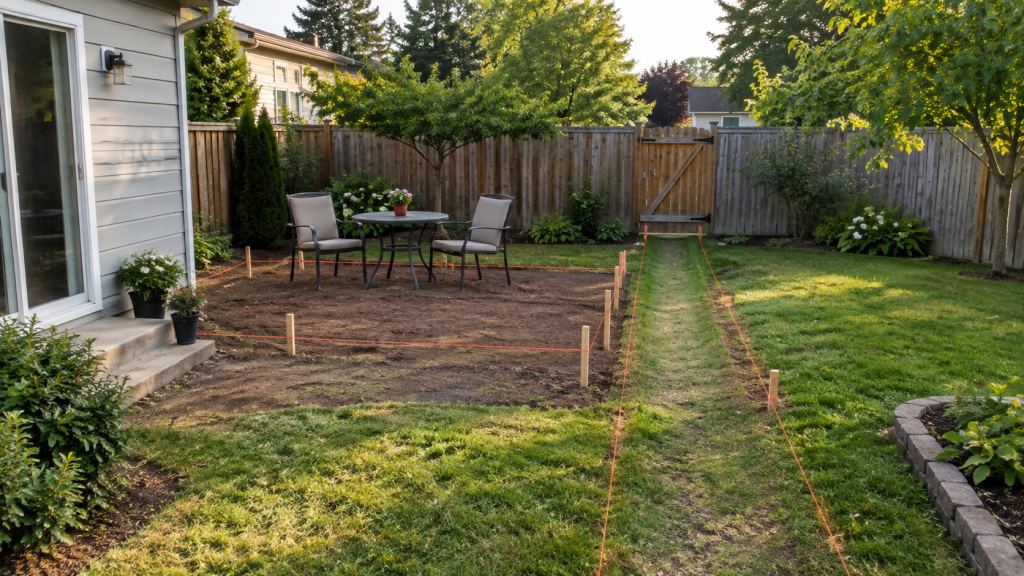
Good measurements matter in a small yard because a few extra feet can change how the space feels. Mark the planned patio area before work begins. Use stakes, string, or temporary markers to see how much room it will take.
Place outdoor furniture within the marked space if possible. This can show whether chairs fit, people can move around a table, and the grill has enough room. Keep a clear path from the house to the rest of the yard. Tight corners and narrow gaps can make a patio feel crowded.
Choose a Simple Patio Shape
Simple shapes often work better in smaller outdoor areas. Rectangles, squares, and corner layouts are easy to furnish and can use space well.
A patio that follows the back or side of the house may leave more open yard than a wide design that extends into the lawn. A corner patio can also use an area that might otherwise go unused. Avoid too many curves, angles, borders, or separate sections. These features may make a small patio feel busy. A clean shape can help the area feel larger and more organized.
Keep Furniture in Scale
Large outdoor furniture can quickly take over a compact patio. Choose pieces that fit the area and match how many people normally use it.
Good options include:
- Round café tables
- Folding chairs
- Narrow benches
- Small two-seat sofas
- Stackable chairs
Leave open space around the furniture. People should be able to pull out a chair, carry food, or walk by without squeezing through a narrow gap. Built-in seating may also save room. A bench along one edge can provide seating without adding several loose chairs.
Use Patio Installation to Create Clear Zones
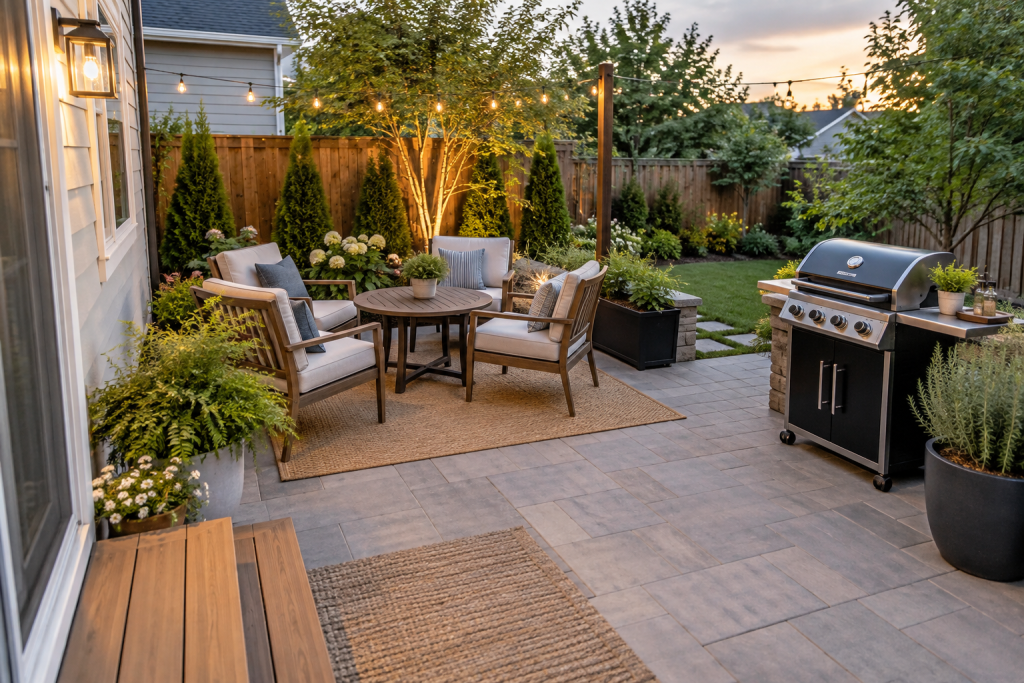
Even a small patio can have simple zones. Use furniture placement to show where each activity belongs instead of adding walls or large dividers.
A small table can define the dining area while a grill sits along an outside edge. A bench or pair of chairs can create another place to relax. Keep the center or main path open. This helps the patio feel connected and easy to move through.
Connect the Patio to the Yard
A small patio should feel like part of the yard. Use the edges to create a smooth link between the patio, lawn, garden, or fence line.Simple planting beds, gravel strips, low planters, or a short path can soften the edge without taking up much room. Keeping nearby features simple can also make the entire outdoor area feel more open.
If you are planning a new outdoor area, professional patio installation can help with layout, size, materials, and placement. If the yard also needs a raised outdoor area, deck installation may be another option.
Avoid Features That Crowd the Space
Small patios often work better with fewer large features. Too many planters, storage boxes, decorations, and furniture pieces can reduce usable floor space.
Choose items that serve a clear purpose. Narrow planters, compact storage, and simple lighting can add function without filling the patio. Leaving some open areas can also make the space easier to clean and use.
Frequently Asked Questions
How Large Should a Small Patio Be?
The right size depends on how you plan to use it. Measure your furniture and leave enough room for walking before choosing the final size.
What Patio Shape Works Best in a Small Yard?
Square, rectangular, and corner layouts often work well because they are easy to furnish and use limited space well.
Can a Small Patio Include a Grill?
Yes. Place the grill where it has enough working room and does not block the main path. Follow the grill maker’s placement and clearance guidance.
How Can I Make a Small Patio Feel Larger?
Use simple furniture, keep walking areas open, limit clutter, and connect the patio visually to the lawn or garden.
Make the Most of a Small Outdoor Area
A small patio can still provide useful room for meals, grilling, relaxing, and time outside. Careful measurements, simple shapes, scaled furniture, and clear walking paths can help the area feel open instead of crowded.
Cole Deck and Fence can help plan and build a patio that fits the size and use of your yard. Contact us to discuss your project and request an estimate. You can also explore the blog for more outdoor living ideas.